
Explore the Pacific’s finest reef ecosystem. 2 or 3 guided dives in the Caño Island Biological Reserve with a 90% chance of seeing reef sharks, turtles, and rays. Led by local guides with 20+ years in these exact waters.
Scuba diving at Caño Island is the dive you will remember longest if you’re coming to Costa Rica.
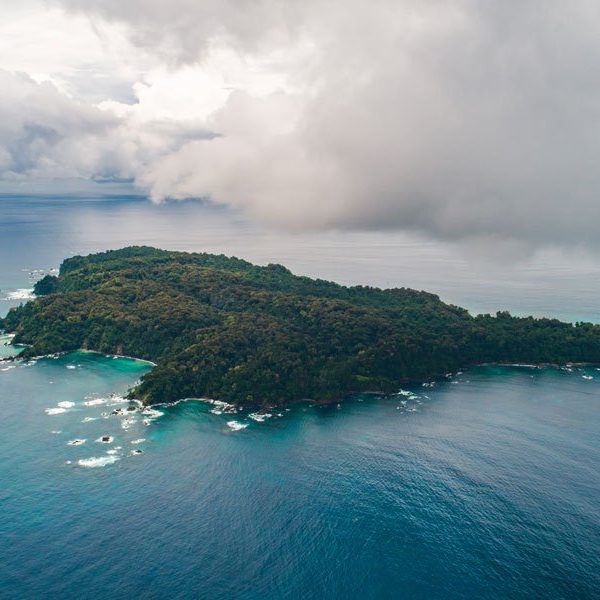
Leaving Drake Bay with our team, Caño Island is 20 kilometres away, 45 minutes across open Pacific water. It sits in the most biodiverse region on the planet, where cold deep-water upwellings collide with warm tropical shallows. That collision of currents creates an explosion of marine life unlike anything else on this coast.
Caño Island has been a biological reserve since 1978, with fishing prohibited without exception.
That absolute protection has built the most intact marine ecosystem you will find on any single dive: whitetip reef sharks, manta rays, eagle rays, sea turtles, whale sharks in season : a complete food chain from the reef floor to the open water above you.
Scuba diving at Caño Island ranks consistently among the top dive destinations in the Eastern Pacific.
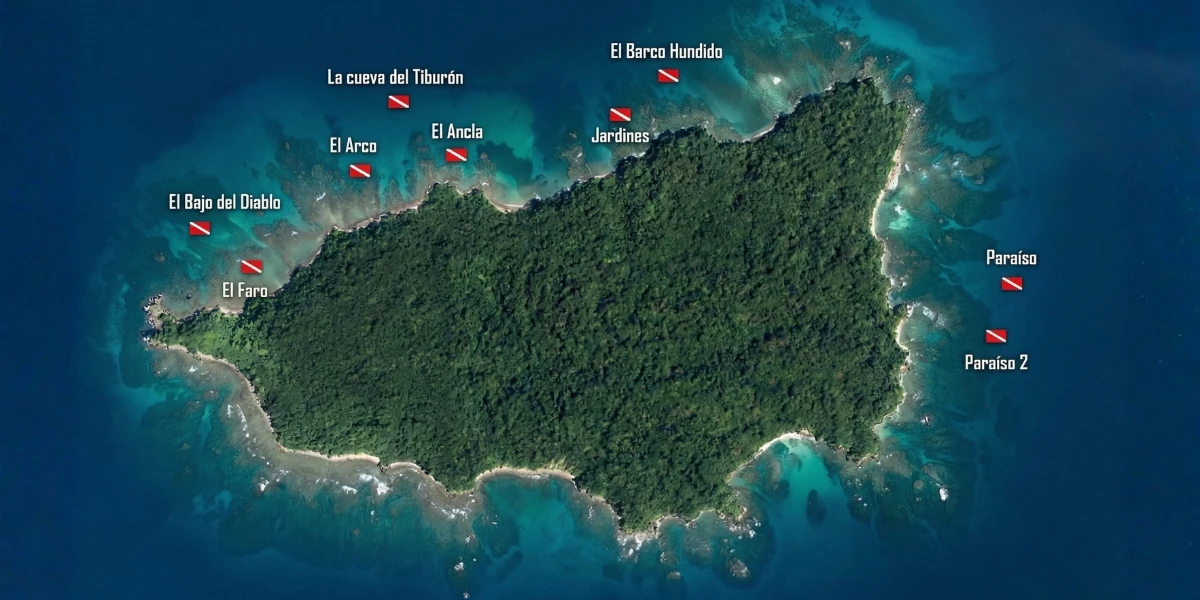
Caño Island has 9 mapped dive sites, each with its own depth, terrain, and marine life. No two dives are the same.
That’s what makes multi-day diving here different from anywhere else on Costa Rica’s Pacific coast: you can dive three, four, five days and never repeat a site. Bajo del Diablo for sharks and pelagics. La Cueva del Tiburón for resting whitetips up close. Jardines for turtles and soft coral.
Your guide selects the sites each morning based on conditions, current, and your certification level. Every day, a different reef. Every dive, something you haven’t seen before.
Caño Island’s protected status since 1978 means the marine life here has had decades to recover without pressure. What you encounter underwater is not curated or seasonal — it is what lives there. These are the species you are most likely to see on a guided dive.
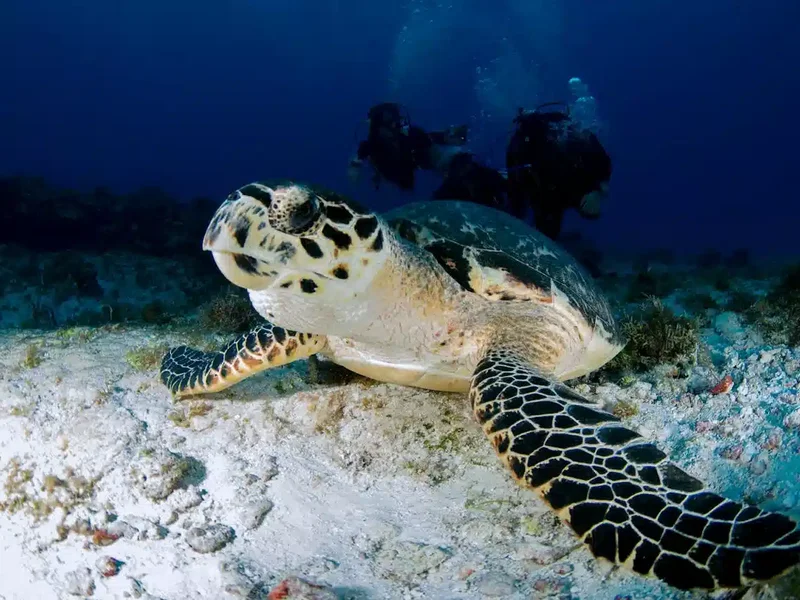
Green and hawksbill turtles move through the reef at close range. Common at most sites — often resting on the bottom or surfacing right above the group during the dive.
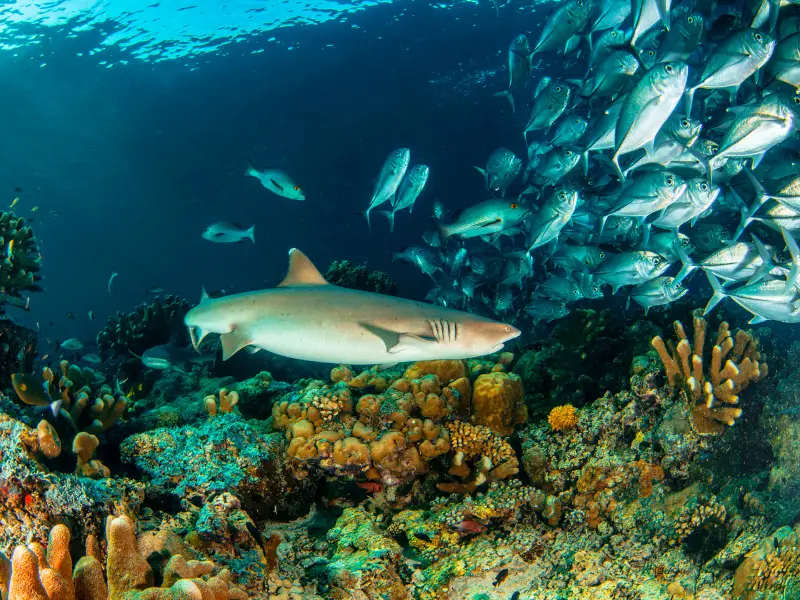
Rest on the sandy bottom between 8 and 18 metres. Seen on 9 out of 10 dive trips. Completely relaxed around divers, reliable sightings at Bajo del Diablo and La Cueva.
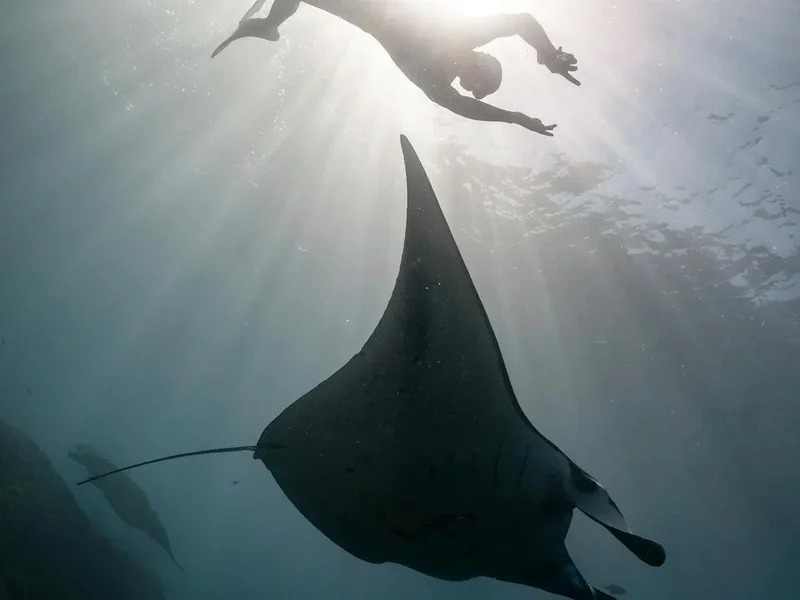
Up to 3 metres across. Oceanic mantas pass in groups, wings overlapping mid-water. Sightings are unpredictable but more frequent from May to November as plankton rises.
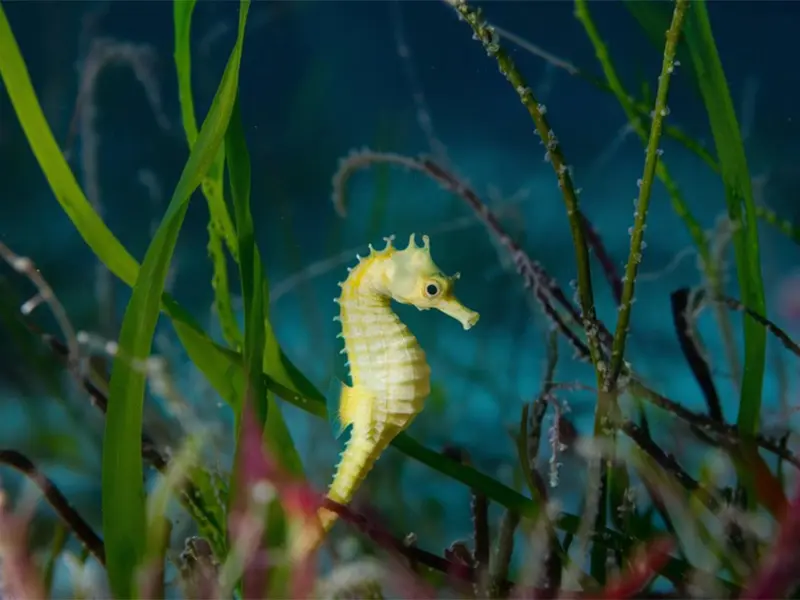
Commonly found clinging to sea fans and corals in protected areas. These masters of camouflage are a favorite for macro photographers and observant divers exploring the reef’s smaller wonders.
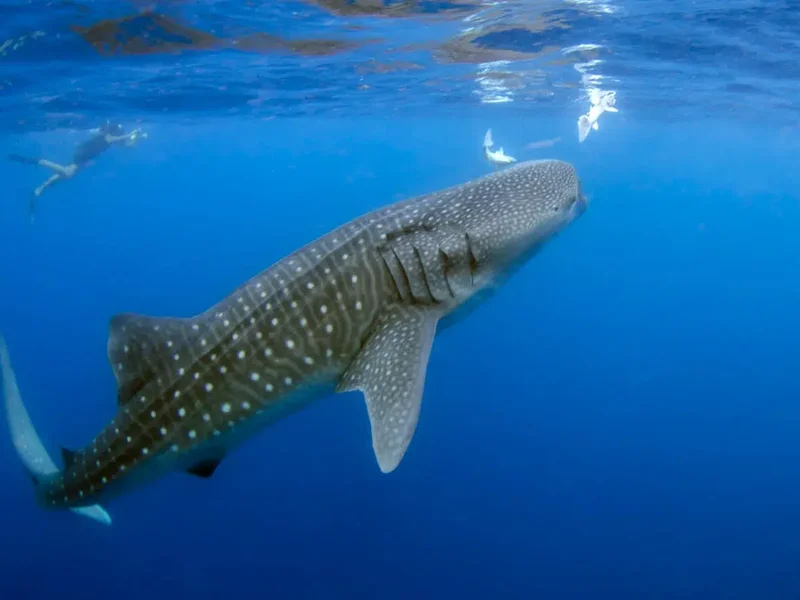
Occasional but documented at Caño Island, particularly May–October when plankton density peaks. The largest fish on the planet , up to 12 metres. A surface encounter or a blue-water dive with one is among the rarest experiences in the reserve.
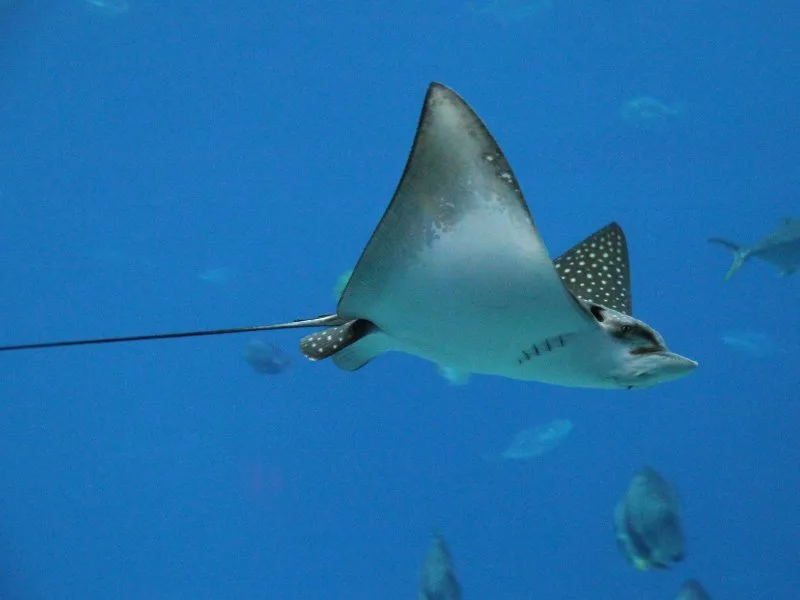
Spotted eagle rays cruise mid-column in pairs or small groups, often crossing between you and the surface. One of the most elegant sightings in the reserve, common at Bajo del Diablo and El Ancla.
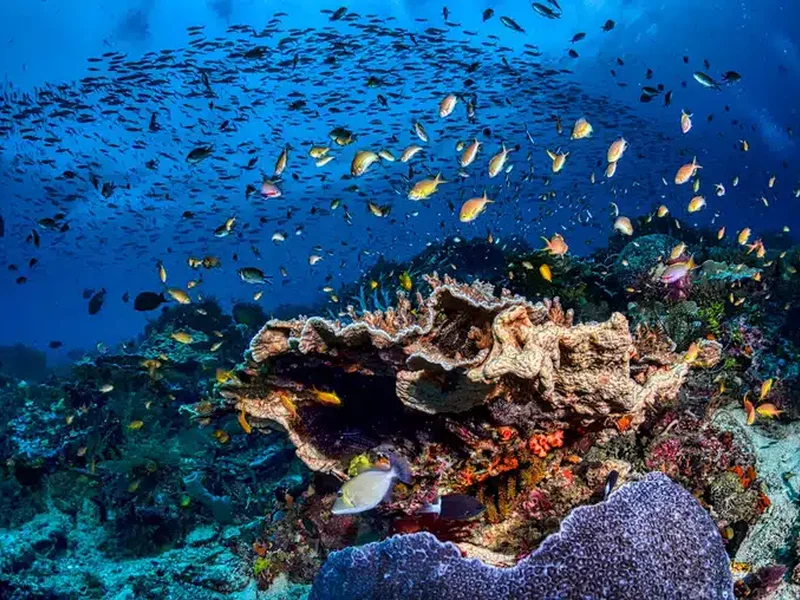
No fishing since 1978. The fish have no fear of divers. Dense schools of parrotfish, snapper, and barracuda move through the group. At some sites the visibility drops temporarily as the school surrounds you.
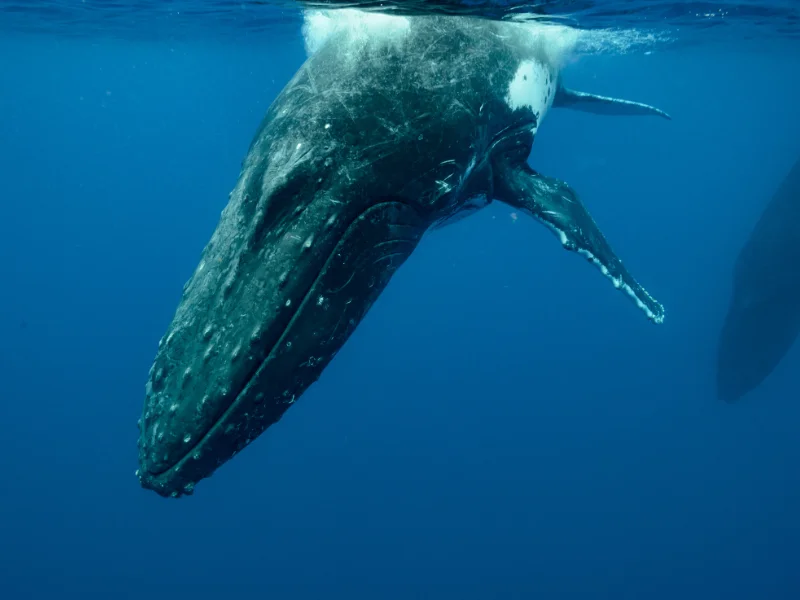
July to October. The boat crossing to Caño Island passes directly through active humpback whale nursery grounds. Drake Bay is one of only two places in the world where northern and southern hemisphere populations visit the same waters.
Caño Island Biological Reserve has been fully protected since 1978 — no fishing, no extraction, no exceptions. That 46-year protection has built the most intact reef ecosystem on Costa Rica’s Pacific coast. Two guided dives. Two different sites. One of the most biodiverse marine environments on the planet.
| Species / Condition | Jan | Feb | Mar | Apr | May | Jun | Jul | Aug | Sep | Oct | Nov | Dec |
|---|---|---|---|---|---|---|---|---|---|---|---|---|
| 🦈 Whitetip Reef Sharks | ||||||||||||
| 🐢 Sea Turtles | ||||||||||||
| 🦅 Eagle Rays | ||||||||||||
| 🐟 Manta Rays | ||||||||||||
| 🐳 Humpbacks (S. Hemisphere) | ||||||||||||
| 🐳 Humpbacks (N. Hemisphere) | ||||||||||||
| 👁 Visibility | ||||||||||||
| 🌊 Sea Conditions |
Limited spots, Book NOW! Only 20 spaces available per day to ensure a personalized experience.
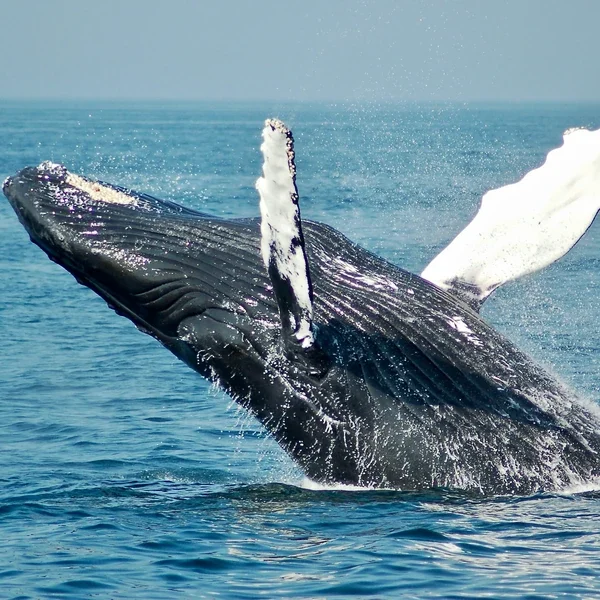
Drake Bay sits on the Pacific coast of Costa Rica at a unique convergence point. The Southern Hemisphere population arrives from Antarctic feeding grounds from July to October.
The Northern Hemisphere population arrives from California and Mexico from December to March. The same bay. Two separate migrations. Almost year-round whale activity.
The 40-minute crossing to Caño Island passes directly through active whale territory. Before you enter the reserve, you are already inside one of the most remarkable marine wildlife corridors on the planet.
Surface breaches, pec slapping, and mother-calf pairs are common from the boat. On still days, humpback songs are audible underwater during the dive.
2 Separate whale populations visiting the same bay. 8 months Combined whale season per year.
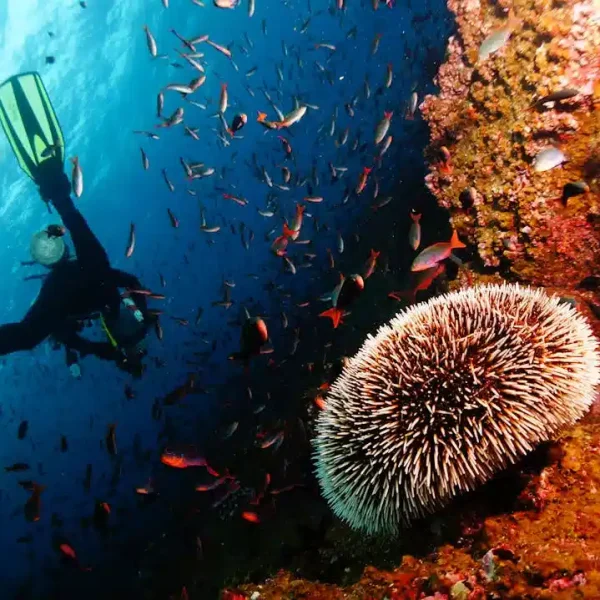
 Maximum 6 divers per guide. You dive in a small group with full attention from your guide.
2-tank dive: $155 | 3-tank dive: $210
No hidden costs. Equipment, boat, reserve entrance fee, and lunch included.
Required to dive inside the Caño Island Biological Reserve. Bring these on the day or send them to us when you book.

Valid diving certification from any recognised agency: PADI, SSI, NAUI, CMAS or equivalent. Physical card or digital version accepted. No certification on the day means no dive.
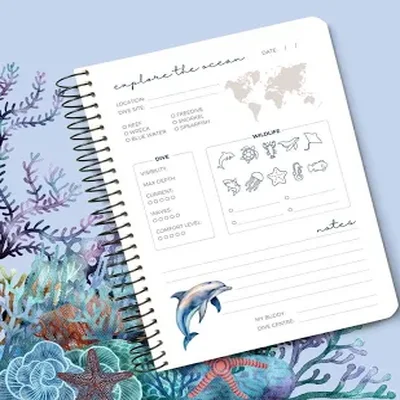
Paper or digital. We check that your recent dive history suits the sites selected. If your last dive was over 12 months ago, a refresher dive is recommended before the day.
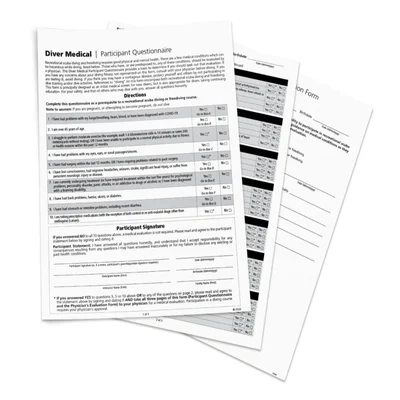
Standard PADI medical form, completed and signed. Available in advance or on arrival. Certain conditions require a doctor’s clearance letter. Contact us if unsure.
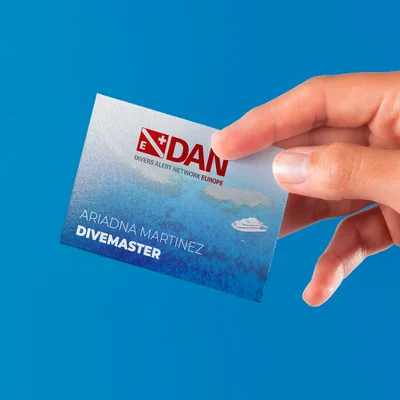
DAN or equivalent dive accident cover is strongly recommended. The nearest hyperbaric chamber is in San José. Without insurance, evacuation costs can be very significant.
In our Google reviews, we are one of the highest-rated dive centers in Costa Rica. Our community highlights our organization, professionalism and the personal touch that makes us unique. connection to this corner of Costa Rica, that’s what makes Drake Divers different.
EXCELENTETrustindex verifica que la fuente original de la reseña sea Google. We had a beautiful snorkeling tour with Drake Divers at Cano Island. They were so organized with the right size fins for 20 people! We had two excellent divers as our guides - Andre (spelling?) and Ashley. No one could believe they could go under for the length of time they did! It seemed like 5 minutes! And they pointed out beautiful fish, sea turtles and more! If you’re in the Drake Bay Area on the Osa Peninsula, make sure to contact them for an unforgettable experience!Publicado enTrustindex verifica que la fuente original de la reseña sea Google. Una experiencia inolvidable. Gracias a Carlos por la excelente organización y a Angelo por ser un guía tan profesional y cercano. Pudimos ver tortugas, tiburones punta blanca, rayas y una enorme variedad de peces en inmersiones impresionantes. Todo el equipo hizo que nos sintiéramos seguros y disfrutáramos al máximo. ¡Totalmente recomendado!Publicado enTrustindex verifica que la fuente original de la reseña sea Google. Très bonne expérience, je recommande :)Publicado enTrustindex verifica que la fuente original de la reseña sea Google. Reservamos con Drake Divers la excursión en Corcovado a la Estación Sirena y gracias a nuestra guía Stefany pudimos ver muchos animales y estuvo atenta para poder mostrarnos todo con detalle junto con las diferentes explicaciones además de ayudarnos a tener las mejores fotos! El tour nos incluía la comida la cual también estuvo muy bien. 100% recomendado!Publicado enTrustindex verifica que la fuente original de la reseña sea Google. 2 belles journées de Plongée en 2 tanks sur 2 sites différents à Isla del Caño , bonne organisation générale avec pause déjeuner sur la plage, inclus après les plongées. Superbe plongées au spot Bajo del diablo qui est top pour voir les Raies mantas et requins de récif. Toutefois la plongée en palanquée de 5 plongeurs pour un guide me semble ( c’est juste mon avis) être un peu limite en terme de sécurité compte tenue des courants et de la visibilité. Enfin concernant les 2 guides , Wilson a été un peu expéditif dans son briefing et Angélo d’une extrême gentillesse.Publicado enTrustindex verifica que la fuente original de la reseña sea Google. A very nice and efficient team. Good and safe organisation. We enjoyed snorkeling with our excellent guide Andrés and shared a good meal on Isla de Caño.Publicado enTrustindex verifica que la fuente original de la reseña sea Google. Nous sommes un groupe de 6 amis, 2 plongeurs et 4 “snorkelers” Nous avons pris contact avec Drake divers pour organiser notre journée à Isla del Caño Depuis le premier contact par mail jusqu’à la finalisation de la logistique de la sortie, Erika a montré beaucoup de réactivité et de gentillesse et a parfaitement répondu à nos attentes et nos questions Lors de la sortie, Angelo a été un dive master impeccable et a su nous montrer toutes les Richesses de ces fonds marins ( requins Pointe blanches, tortues , et une très grande diversité de poissons) Andres, quant à lui a été un snorkeling master patient et attentionné, sachant accompagner et rassurer même une débutante n’ayant pas confiance dans l’eau. Il nous a permis de voir aussi toute la richesse marine : poissons , tortues, requins ,… Cette sortie a été couronnée par un excellent pique nique sur la plage Une expérience que nous recommandons aux amateurs de vie marine Merci à toute l’équipePublicado enTrustindex verifica que la fuente original de la reseña sea Google. Great dive spots and great guides (Angello & Wilson). Nice lunch at a beautiful crystal clear water beach (Playa Josecito) after the second dive. Huge devil rays (4-5 m wingspan) at Bajo del Diablo passing by in only 1-2 m distance, amazing! Many green sea turtles and whitetip reef sharks. Before the start of the first dive some equipment was missing but as per Costa Ricanian „Pura Vida!“ another scuba diving operator helped out and everything was OK again.
Limited spots, Book NOW! Only 20 spaces available per day to ensure a personalized experience.
Any open water certification from a recognised agency is accepted: PADI, SSI, NAUI, CMAS, or equivalent. You must bring your certification card (physical or digital) on the day. Without it, we cannot take you diving inside the reserve — it is a legal requirement.
No. All equipment is included: wetsuit, BCD, regulator, tank, mask, fins, and weights. If you prefer to use your own gear, you are welcome to — just let us know in advance. We ask that all personal regulators have a current service record.
The 2-tank option includes two guided dives at two separate reef sites, with a surface interval between them. The 3-tank option adds a third dive at a third site, which is typically the deepest or most exposed site of the day. The 3-tank option is best for experienced divers who want to maximise time in the water.
Depths vary by site and by your certification level. The typical range is 12–25 metres for most dives. At sites like Bajo del Diablo or El Arco, depths can reach 30–40 metres for Advanced-certified divers. We never exceed your certification limits.
Yes. If it has been over a year since your last dive, PADI standards recommend completing a PADI Reactivate session. Since we do not have local dive sites in Drake Bay, this session is done directly at Caño Island, always accompanied by an instructor. This will rebuild your confidence and ensure you get the most from your dives at the reserve. Contact us and we will arrange it.
Every month has something to offer. December to April brings the best visibility and the calmest sea conditions. May to November brings more marine life — manta rays, eagle rays, and humpback whales (July–October). There is no bad time to dive here, only different reasons to come.
Call or message us directly. Talk to one of our local instructors. We’ll listen to you and help you choose the best diving or snorkeling experience for your level.